






What is a frontline manager?
Frontline managers (or first-line managers) such as floor supervisors, foremen, and office managers, are part of the organization’s management team. Their role is to lead an operational unit and ensure optimal day-to-day functioning of core business processes to provide essential business services and goods.
This role involves two main responsibilities. First, the frontline manager serves as a link between senior management and front-line employees, facilitating clear and consistent communication about daily operations – whether to escalate issues, clarify decisions, or align activities with business goals. Second, they directly supervise and support one or more teams while fostering positive, strong relationships with employees.
Top responsibilities of a frontline manager
On a daily basis, frontline leaders carry out several key responsibilities enabling them to coordinate operations, achieve objectives, and motivate their team.
They are typically responsible for:
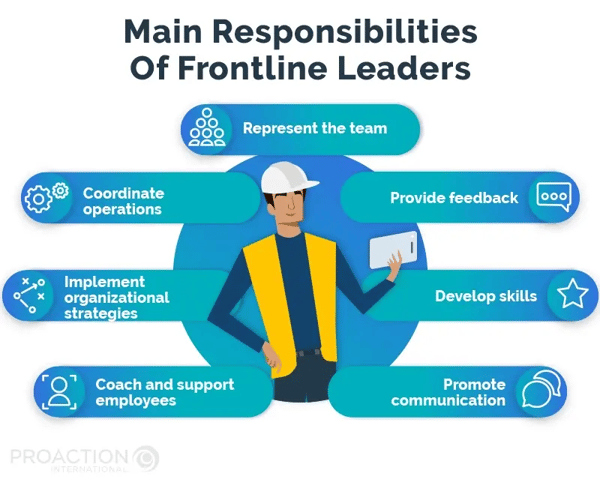
Representing their team
The frontline manager represents one or more teams to senior management and other departments across the company. They communicate the expectations, concerns, and ideas of their direct reports, and advocate for their interests when necessary.
Executing organizational strategies
This leader plans and coordinates their team’s operational activities (priorities, tasks, projects, etc.) in alignment with core business processes and strategies. They must provide the tools and resources required to carry out these operations.
Mentoring and supporting employees
They are responsible for guiding and supporting their team members. Frontline leaders ensure that employees have the resources they need to perform their duties effectively and that their daily work is not hindered by obstacles. When issues arise, they are present and proactive, resolving them quickly to minimize disruptions.
Promoting communication
The first-line manager facilitates communication among team members and encourages open discussions. In doing so, they create a positive, collaborative, and creative work environment.
Providing feedback
Frontline leaders regularly provide constructive feedback to their team members. They recognize their successes, encourage them, and help them identify areas for improvement. Feedback is given in an objective, respectful, and growth-oriented way.
Developing skills
The role of the frontline manager is to identify the strengths and weaknesses of individual employees and offer development opportunities (skills training, e-learning, etc.) to drive professional growth and a sense of accomplishment.
The qualities of a frontline manager
Several qualities or soft skills are crucial for a frontline leader to excel in their role.
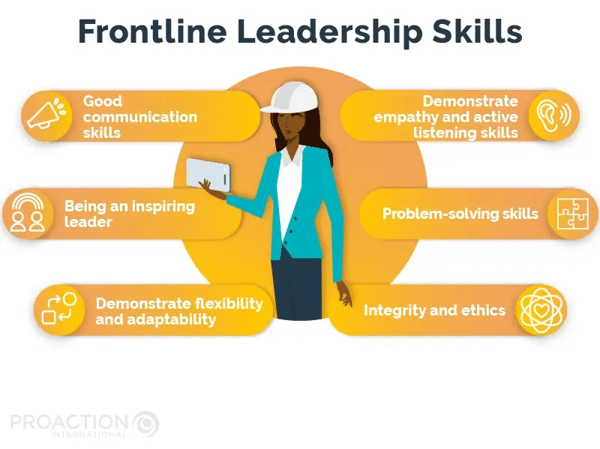
Communicate clearly
The frontline manager is an effective communicator. They demonstrate active listening skills, ask relevant questions, convey information clearly, and express their ideas without ambiguity. By communicating in a benevolent, open, and transparent way, they foster trust and mutual respect within their team.
Demonstrate empathy
A good team leader understands their direct reports and can put themselves in their shoes when the situation calls for it. This empathetic leadership enables them to recognize their employees’ expectations, concerns, and perspectives, and to represent them effectively. It also strengthens relationships within the team.
Be an inspiring leader
The frontline manager is an inspiring and motivating leader who gives meaning to work. This encourages employees to invest themselves in their daily tasks, and take on challenges and initiatives. It also creates a work environment where employees feel productive, engaged, and satisfied.
Show integrity and ethics
They must demonstrate integrity and ethics in all their actions. They are familiar with labor law principles, internal policies, and procedures, and serve as a model of appropriate professional conduct. They respect and embody the company’s values, rules, and organizational culture.
Manage conflicts effectively
In the event of conflicts, the frontline manager acts as a mediator. They must apply the practices and mechanisms in place to quickly resolve disagreements within their team. This requires them to make impartial decisions, remain objective, and find solutions that suit all parties – which can be challenging when managing diverse teams.
Demonstrate flexibility and adaptability
Frontline leaders can adapt to the changing contexts of their team and organization. Flexible in their management methods, they are ready to adjust their approach based on new circumstances. They guide their team through changes, make bold decisions, and create an environment conducive to innovation.
The value of frontline managers for the organization
According to the Harvard Business Review, frontline managers account for approximately 60% of a company’s management ranks. This significant figure highlights the importance of these individuals within organizations.
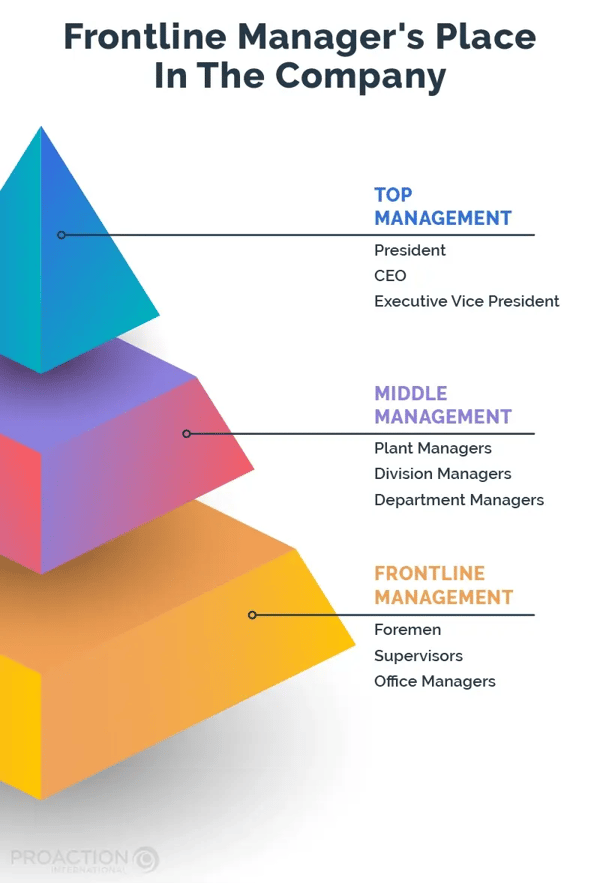
Frontline managers play a central role because they operate directly on the floor, at the center of operations and teams. They must supervise and coordinate daily activities and workflows, while ensuring that problems are resolved quickly and company goals are met. By creating a stable, productive, and thriving environment, they actively contribute to increase organizational performance.
Furthermore, true leaders serve as a source of employee motivation. By supporting them through daily challenges, regularly recognizing their contributions, and empowering them, they strengthen engagement and job satisfaction. Satisfied employees are more productive, which positively impacts operational results.
Finally, the presence of frontline managers on the shop floor builds trust between them and their team, facilitating collaboration and cohesion at work. This positive environment helps reduce staff turnover, leading to better retention of talent and expertise.
A manager's role is far more than supervisory. 70% of a team's engagement is influenced by managers.
7 Best practices to excel in a frontline management role
From developing crucial leadership skills to honing strategic abilities, here are seven best practices to adopt to become a high-performing, inspiring, and successful frontline leader:
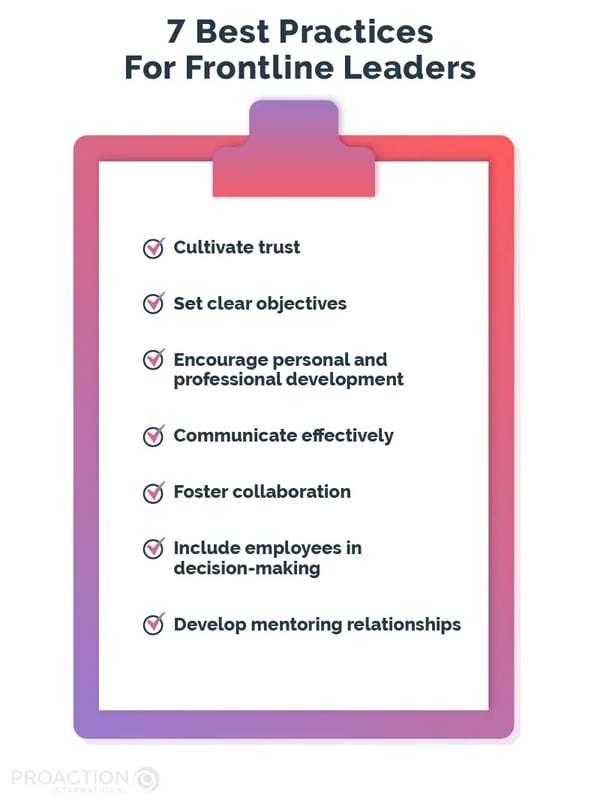
1. Cultivate trust
Trust is the key to establishing your credibility and rallying your team members around common business goals. You must be transparent, honest, and reliable, both in your words and actions.
Cultivate trust daily through consistent actions, active listening, and keeping commitments to create an environment where everyone feels safe to speak up, contribute, and collaborate fully.
2. Set clear goals
Define clear and measurable goals for your team and involve each employee in developing their individual goals while ensuring they align with business strategies. Clearly set goals help give purpose to daily tasks and motivate teams.
3. Foster professional development
Identify your employees’ professional development needs and offer them training opportunities, motivating challenges and projects, and more responsibilities.
If career advancement paths exist within your company, present them to your employees. This not only promotes talent retention but also keeps them motivated and productive.
4. Communicate effectively
Practice open and bidirectional communication to share information and news that could impact your team’s work. Be approachable by welcoming questions and answering them honestly.
Stay attuned to your employees and provide them with regular feedback, especially during times of change.
5. Encourage collaboration
Create a collaborative environment by providing regular opportunities for teamwork. Joint projects facilitate learning and knowledge sharing, generate new and creative ideas, and highlight everyone’s contributions.
6. Involve employees in decision-making
Involve your employees in decision-making processes that affect them and seek their input when developing strategies, action plans, or organizational changes. This helps strengthen their sense of belonging and commitment.
7. Develop mentoring relationships
Promote mentoring within your team by encouraging senior employees to share their expertise and guide those with less experience. Mentoring is an effective way to transfer knowledge and develop skills, fostering highly competent and performing teams.

Support managers to maximize impact
Frontline managers hold a strategic position within the organization. As the link between upper management and frontline teams, they must ensure effective execution of operational priorities, engage front-line employees, and create the conditions conducive to high performance. Their role requires juggling a variety of responsibilities on a daily basis, ranging from communication to problem-solving and talent development.
However, excelling in this role cannot be improvised. Technical knowledge and operational experience are not always enough for developing crucial leadership skills, emotional intelligence, and management instinct needed to positively influence a team. This is why coaching support is an essential tool for helping first-line managers strengthen their practices and develop behaviors that foster employee engagement and performance, and sustain organization's success.